
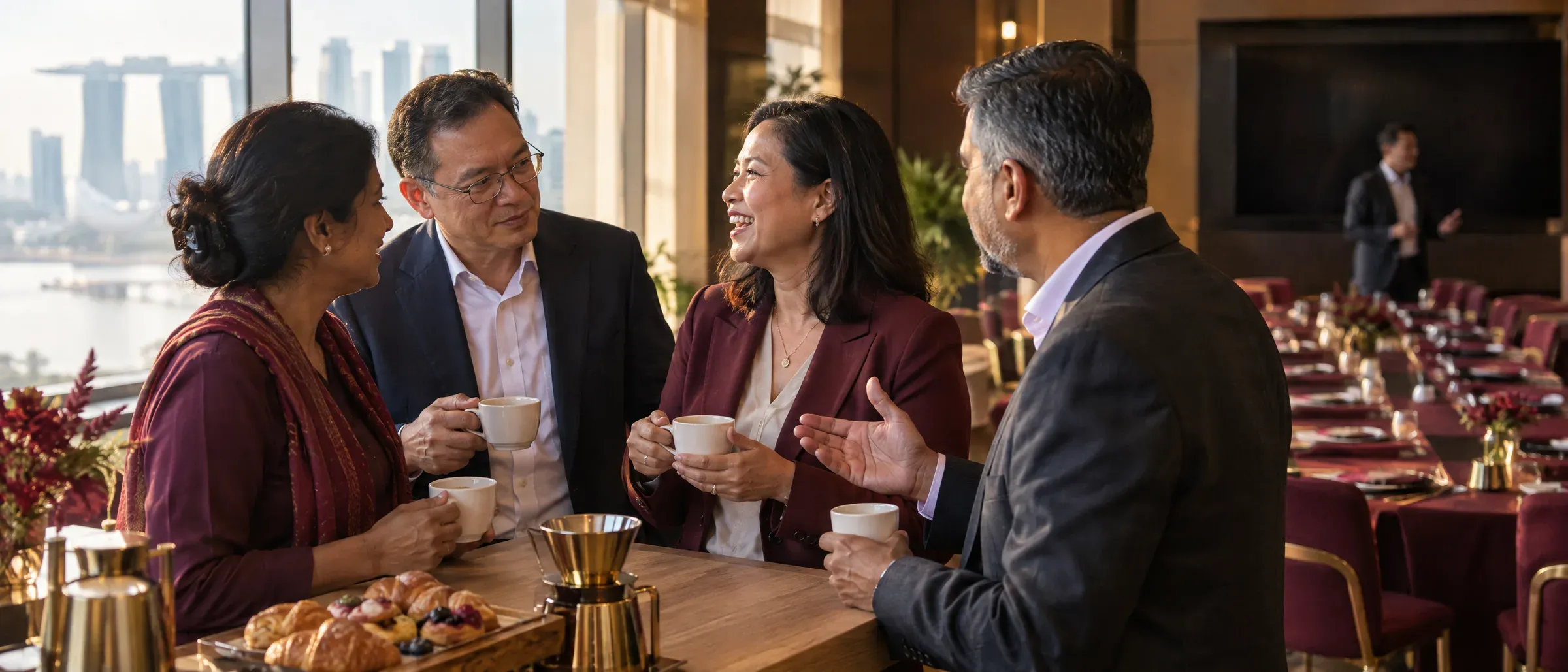
EVENTS · BREAKFAST TALK, IN PERSON · HELD 5 OCTOBER 2026
AI Strategy Breakfast
AI training isn't the same as an AI strategy.
A breakfast briefing for business owners and executives on what an AI strategy needs beyond a training budget: an operating model your team can run, a way to use generative AI that tests your business plan instead of simply approving it, and governance built for Singapore and shown live on an agentic AI system. Closing with Dr. P. K. Soh of HAAR on the AI product he has already shipped.
-
-
-
-
-
Event recap
Five talks, one conclusion: the AI was never the hard part
On Monday 5 October, business owners, executives and founders joined us at SGInnovate on Carpenter Street for breakfast and a morning on what an AI strategy needs beyond a training budget.
The five talks came at the question from different directions and kept arriving at the same place. Dr. Jayarethanam Pillai argued that training adds options while strategy decides what to stop. Michael Low showed that a pilot proves something is possible without creating an operating model. Patrick Ng explained why a language model asked to judge a business plan will usually approve it. Terence Kok traced eight public incidents of AI agents going wrong to the controls they lacked, then ran a governed voice banking assistant live. Dr. P. K. Soh closed with the most candid account of the morning: HAAR built the AI it set out to build, and found that the problem standing between the company and revenue was a different one.
The capability of the technology was not the constraint in any of the five talks. The decisions around it were. The closing slide put it in six words: decide the strategy, then train for it.
Photos
From the room
-
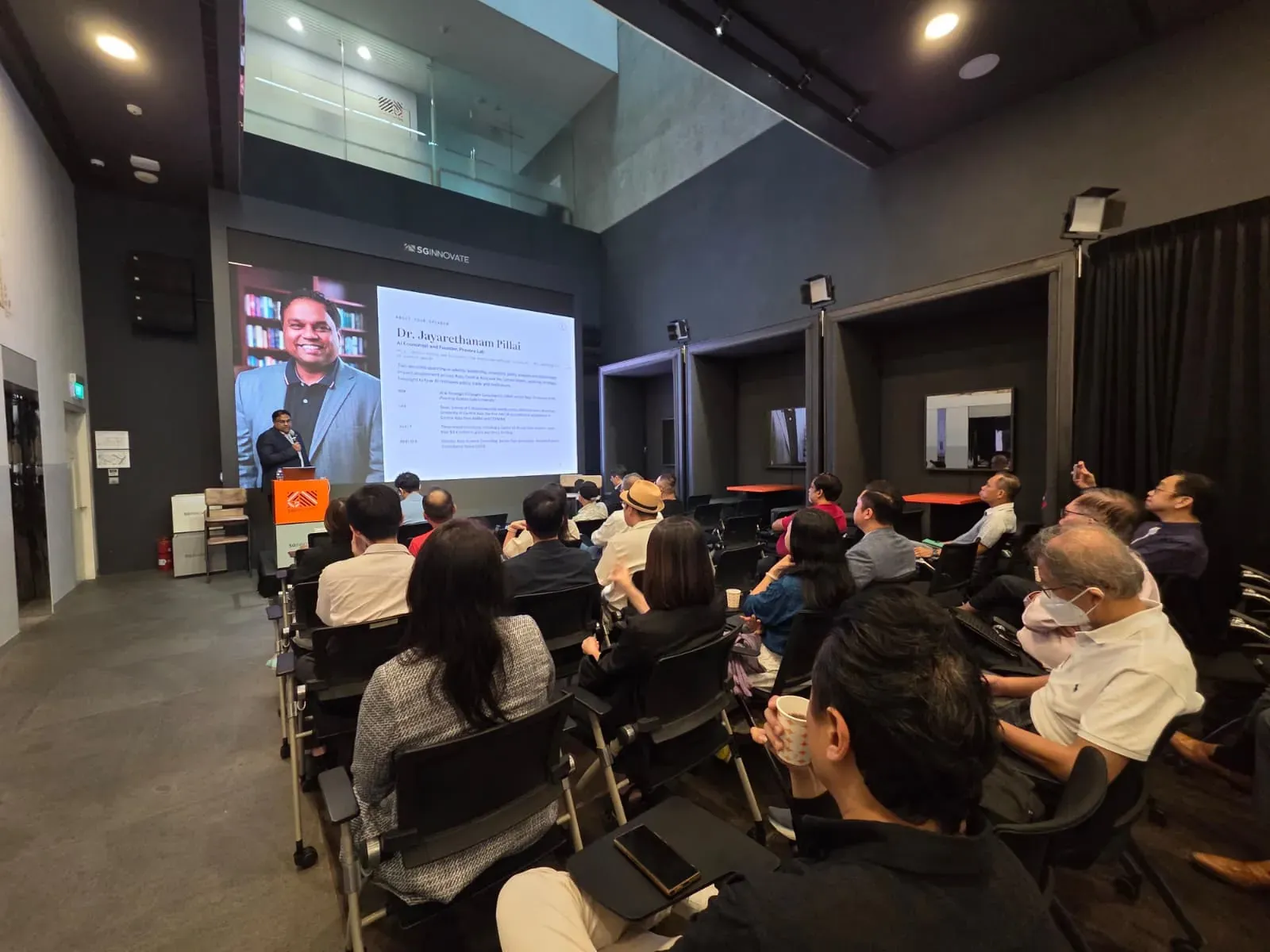
A full room on Level 1 at SGInnovate as Dr. Jayarethanam Pillai opens the morning. -
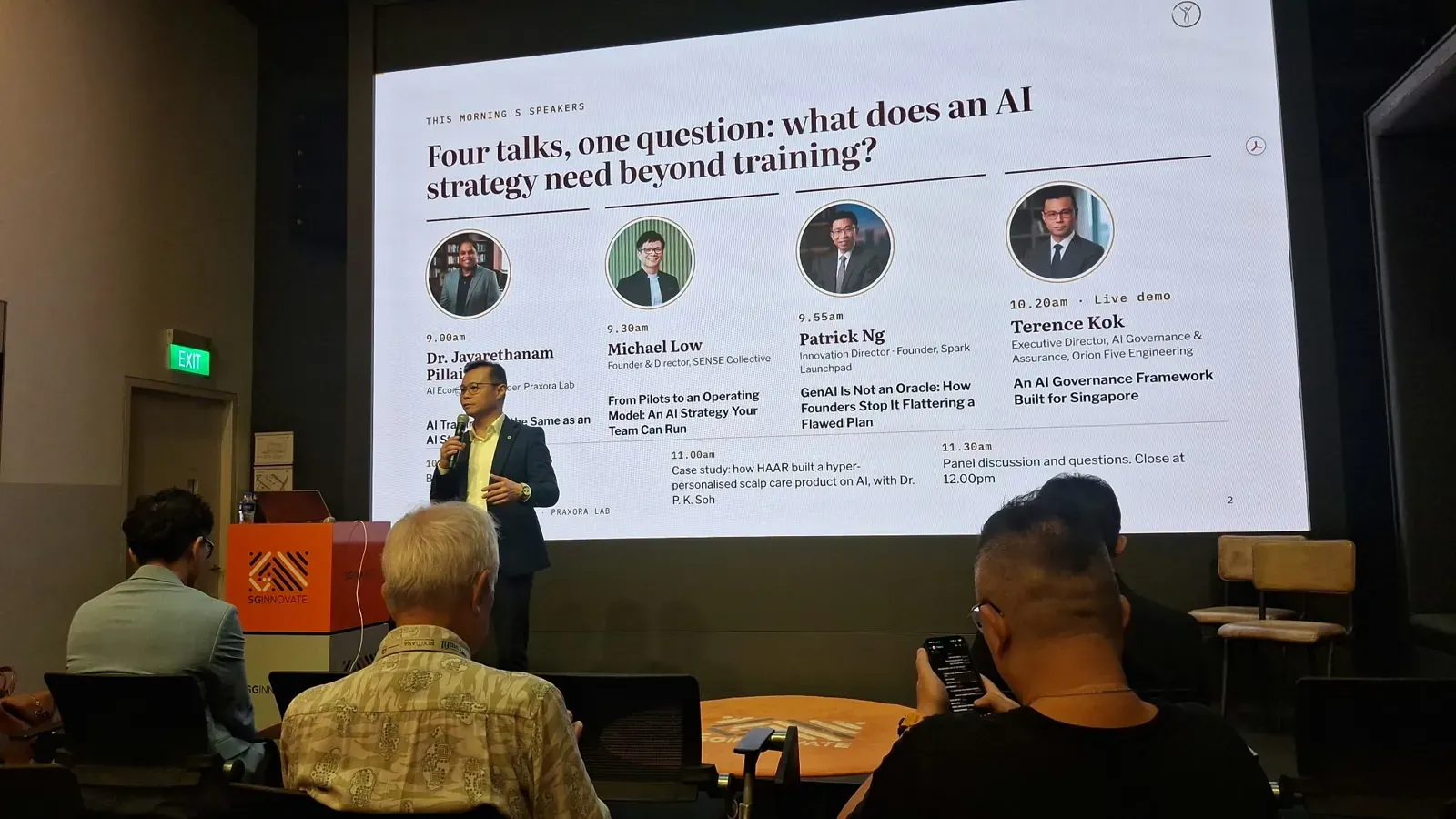
Four talks, one question: what does an AI strategy need beyond training? -
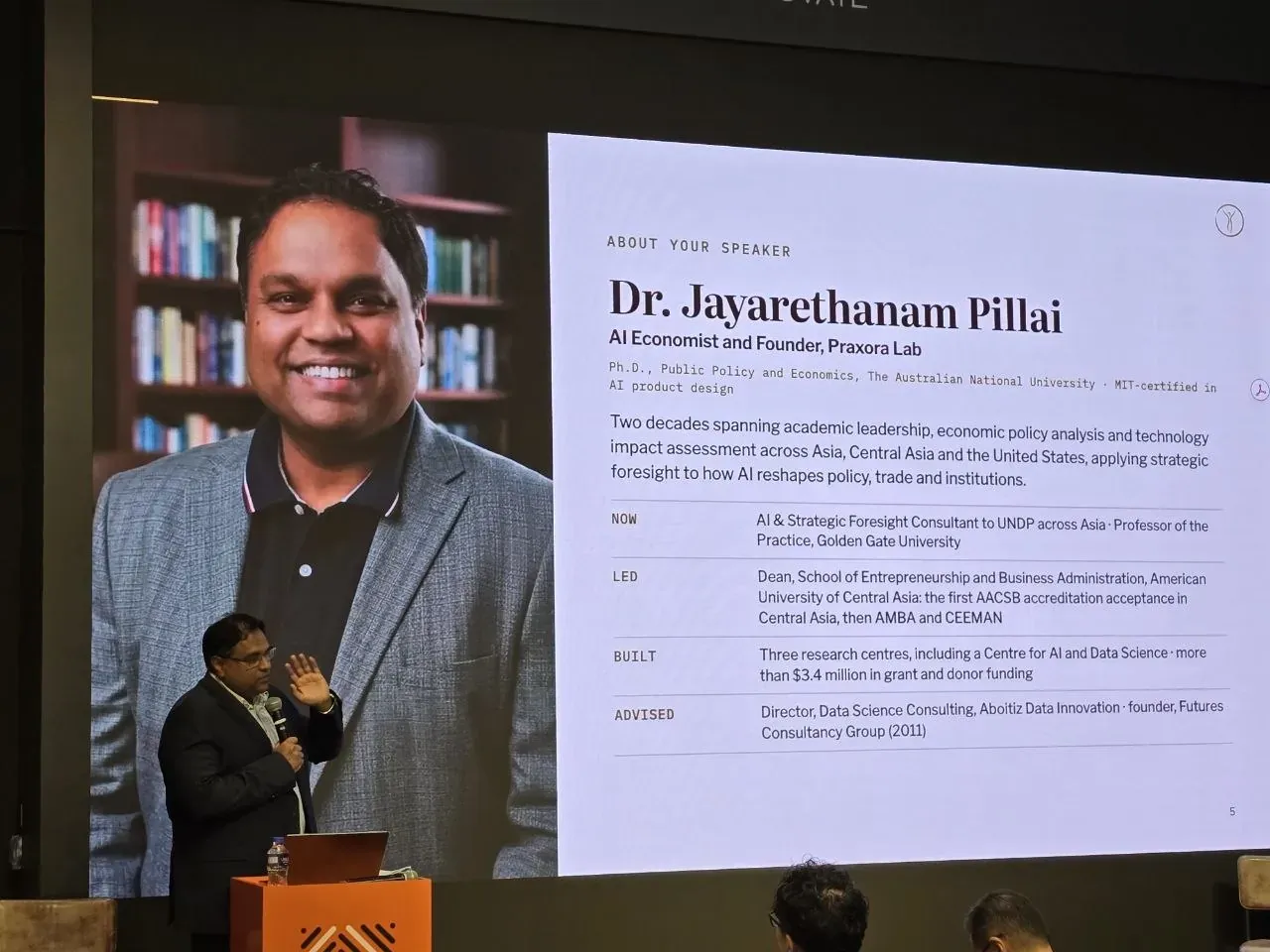
Dr. Jayarethanam Pillai: AI training isn't the same as an AI strategy. -
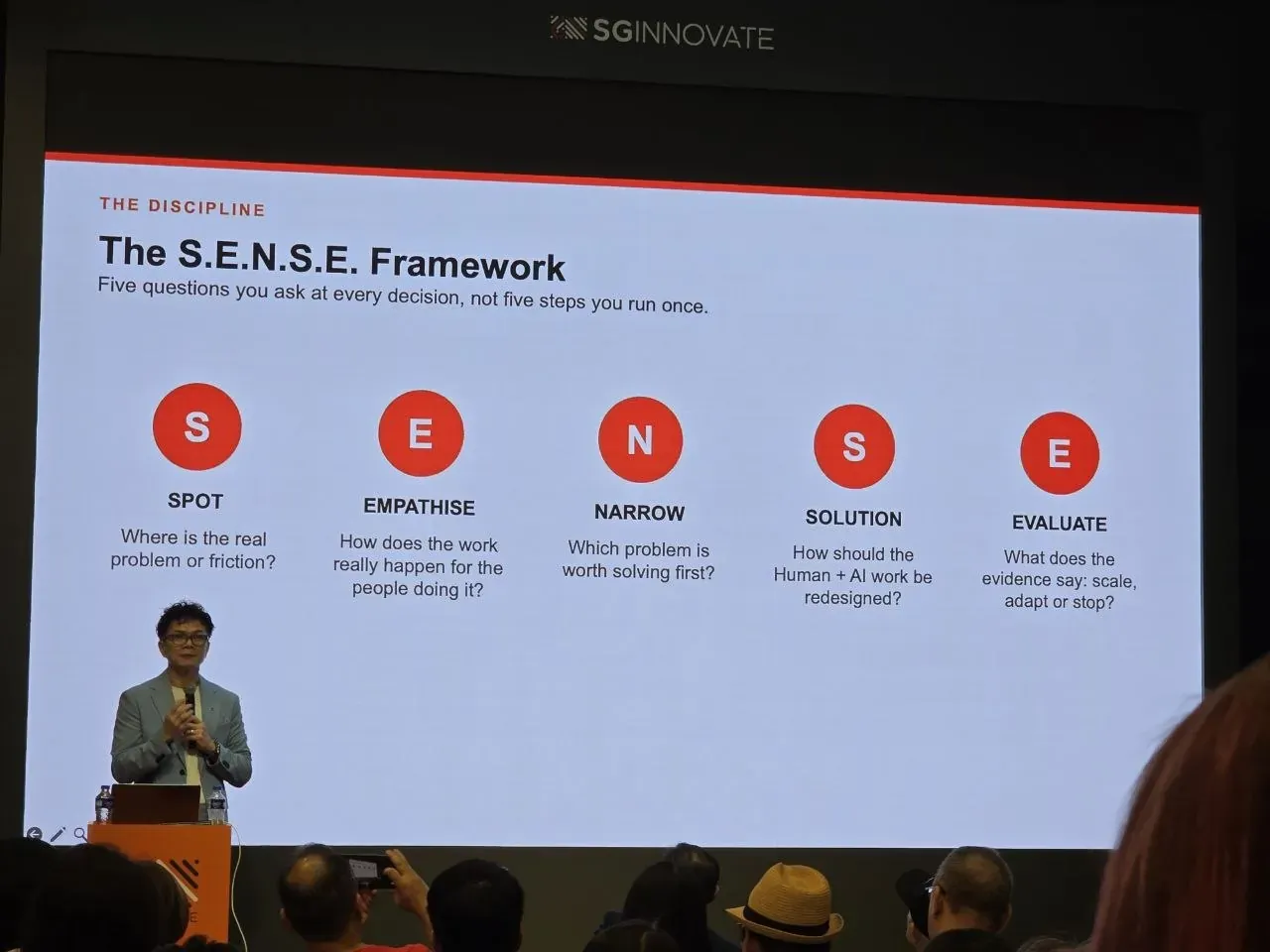
Michael Low walks through the S.E.N.S.E. framework. -
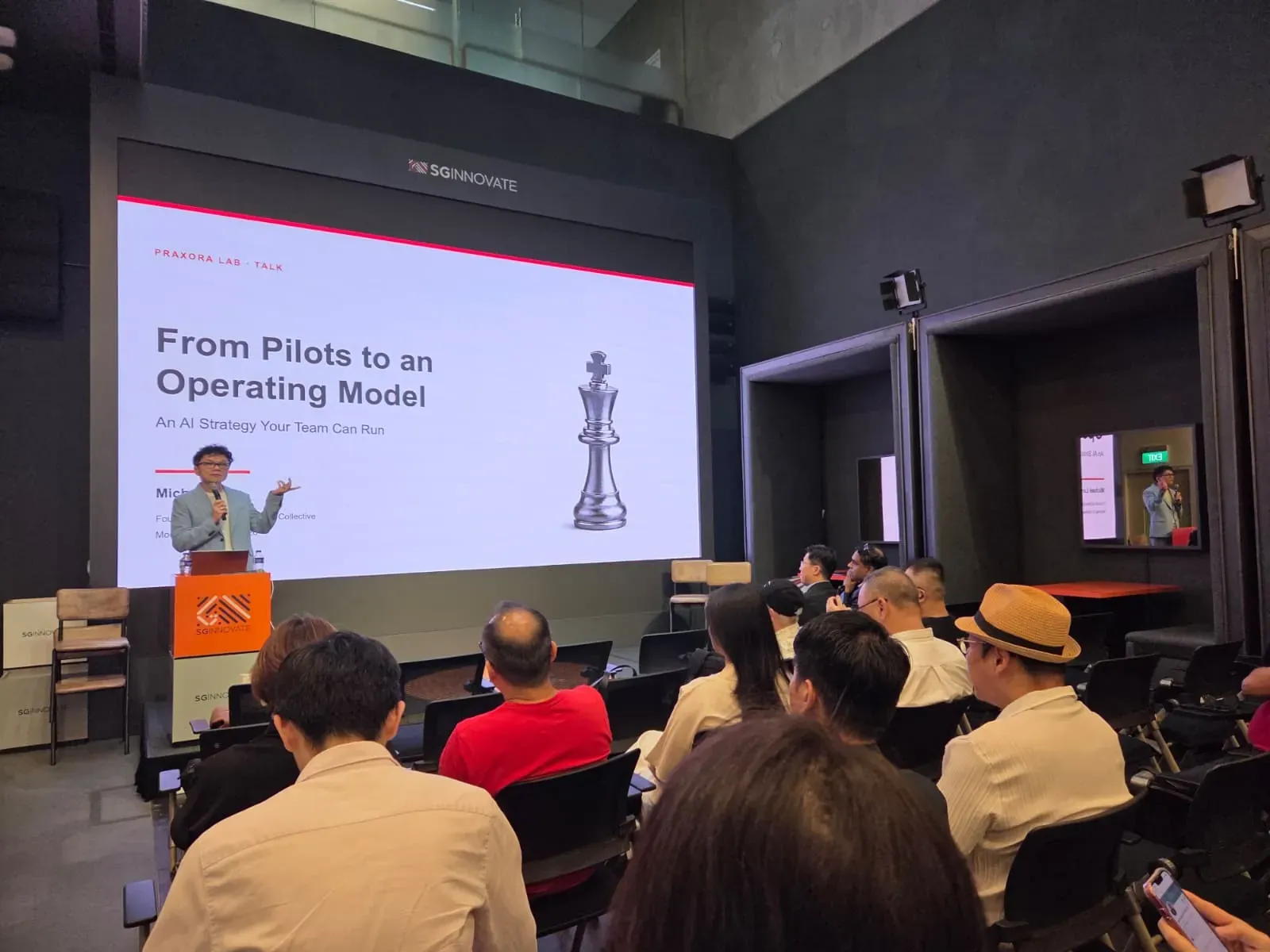
From pilots to an operating model: Michael Low with the room. -
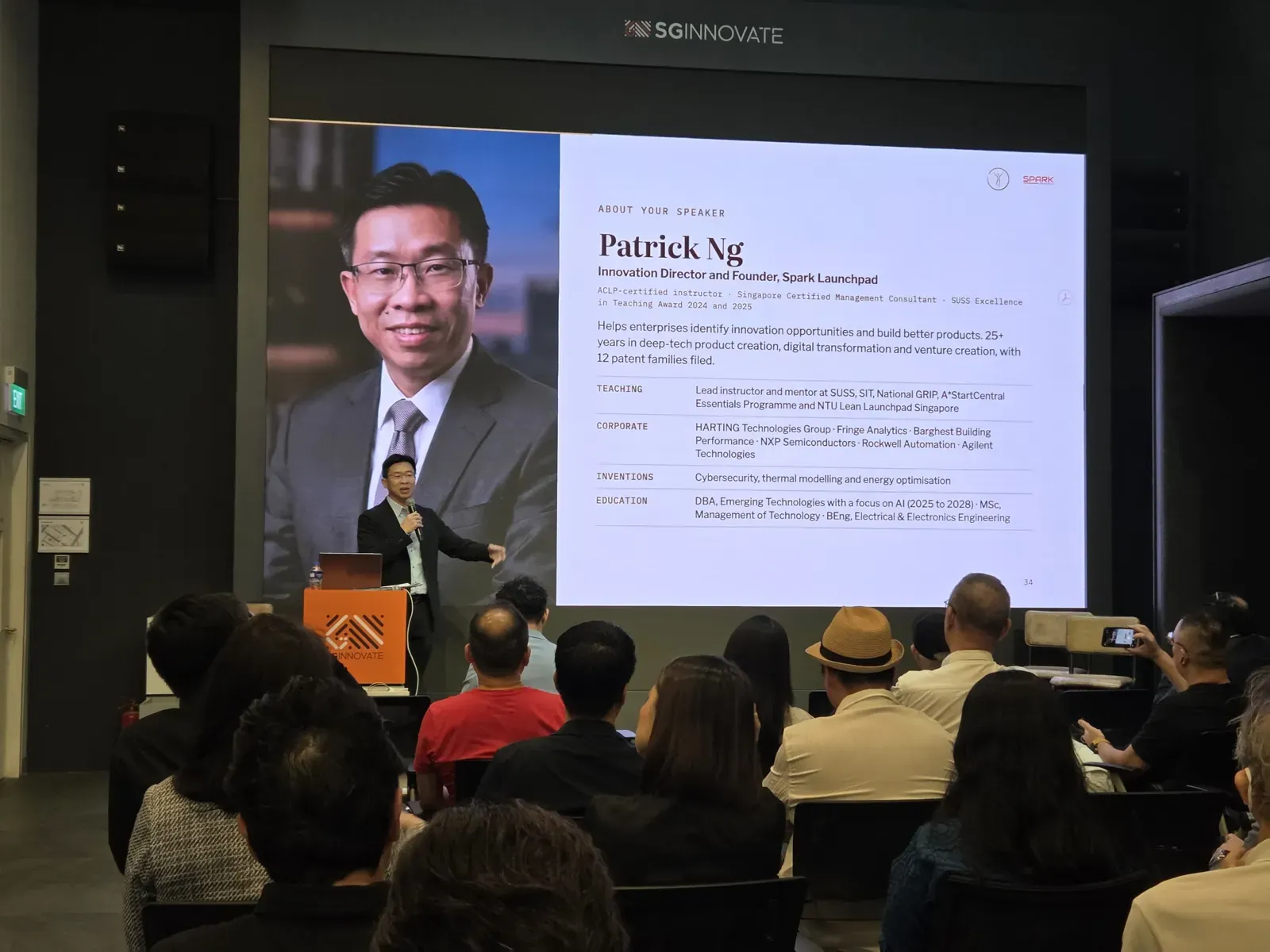
Patrick Ng takes the stage for the third talk. -
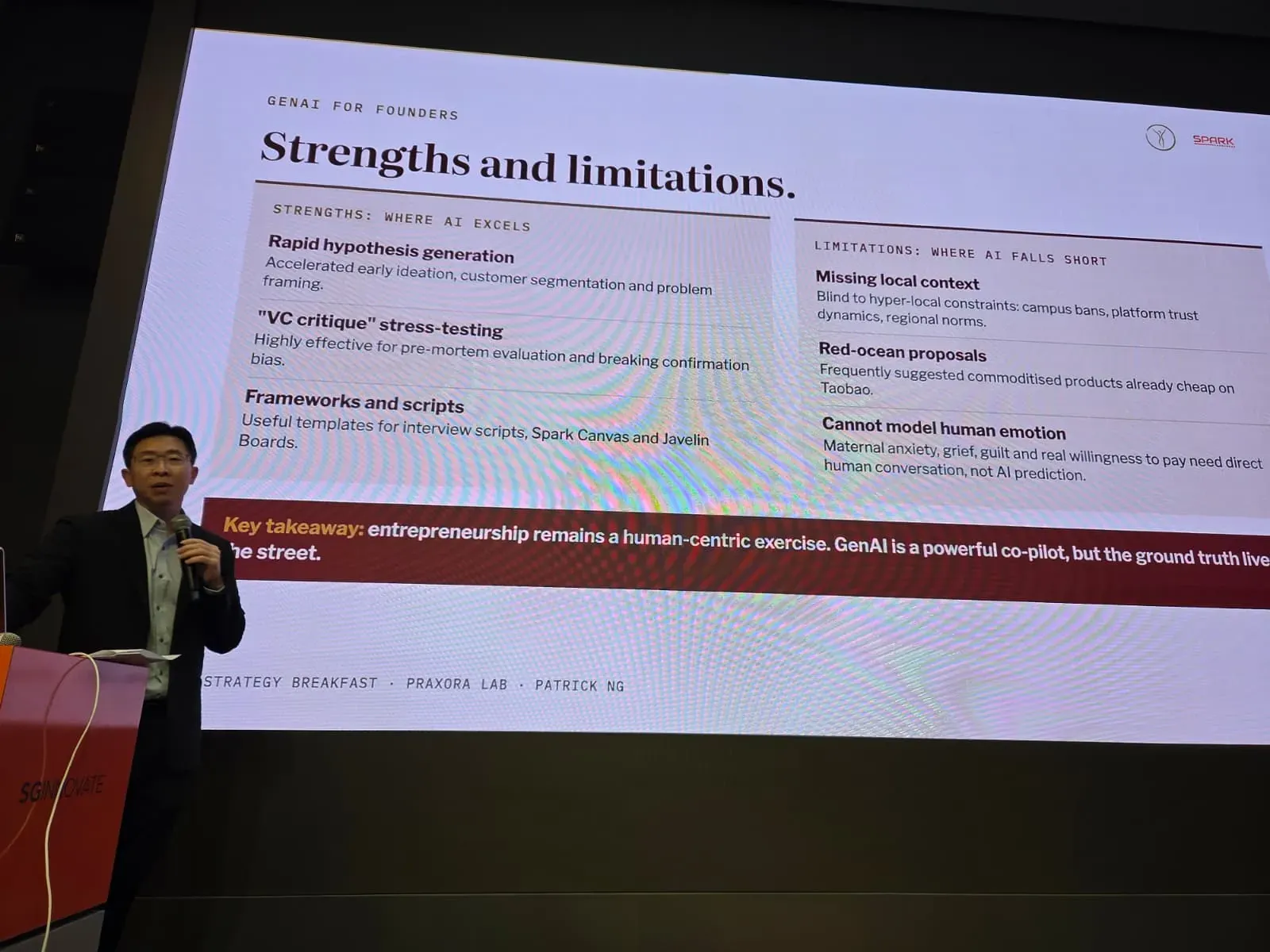
Patrick Ng on where generative AI helps founders, and where it falls short. -
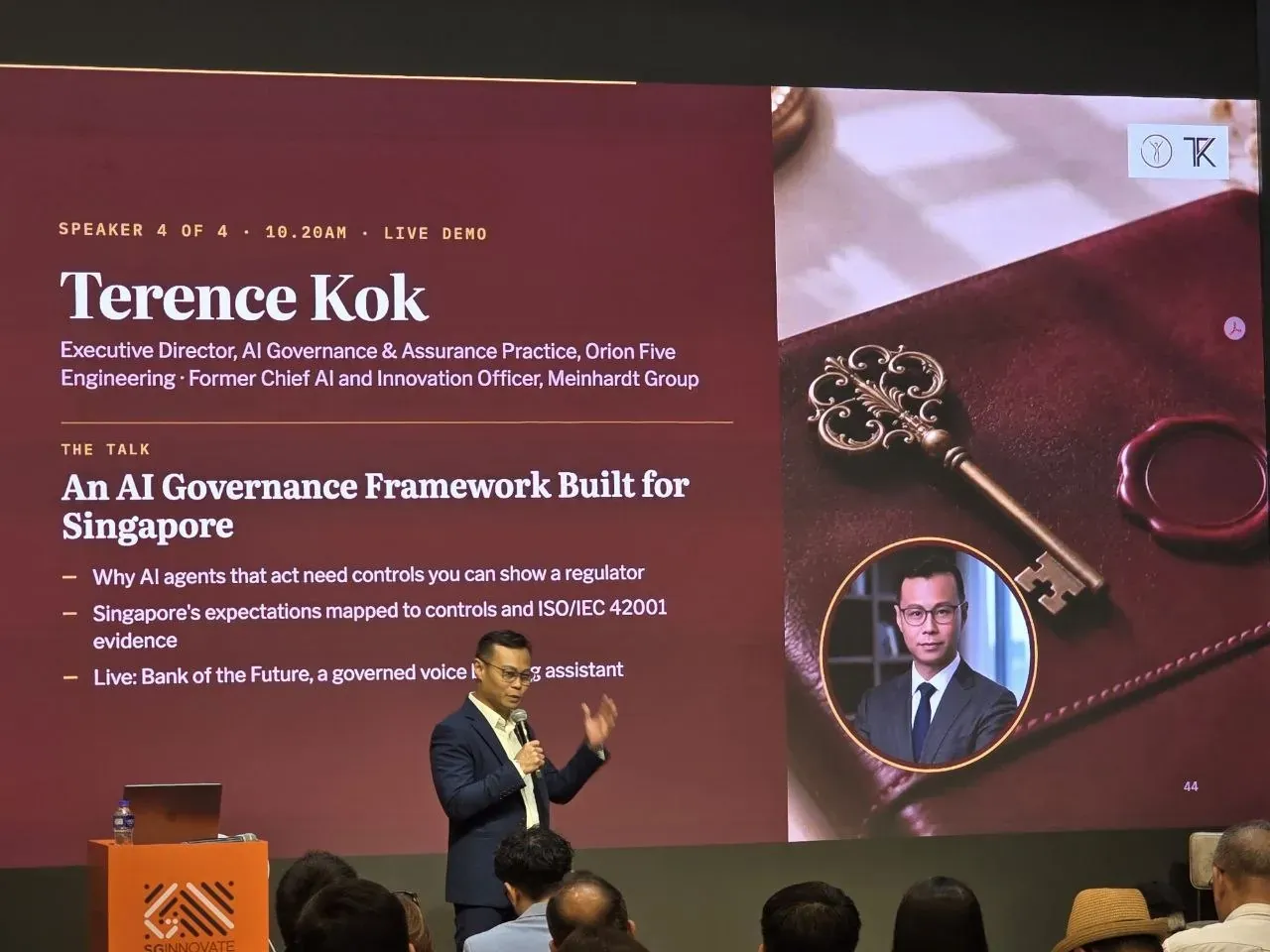
Terence Kok before the live demonstration of a governed voice banking assistant. -
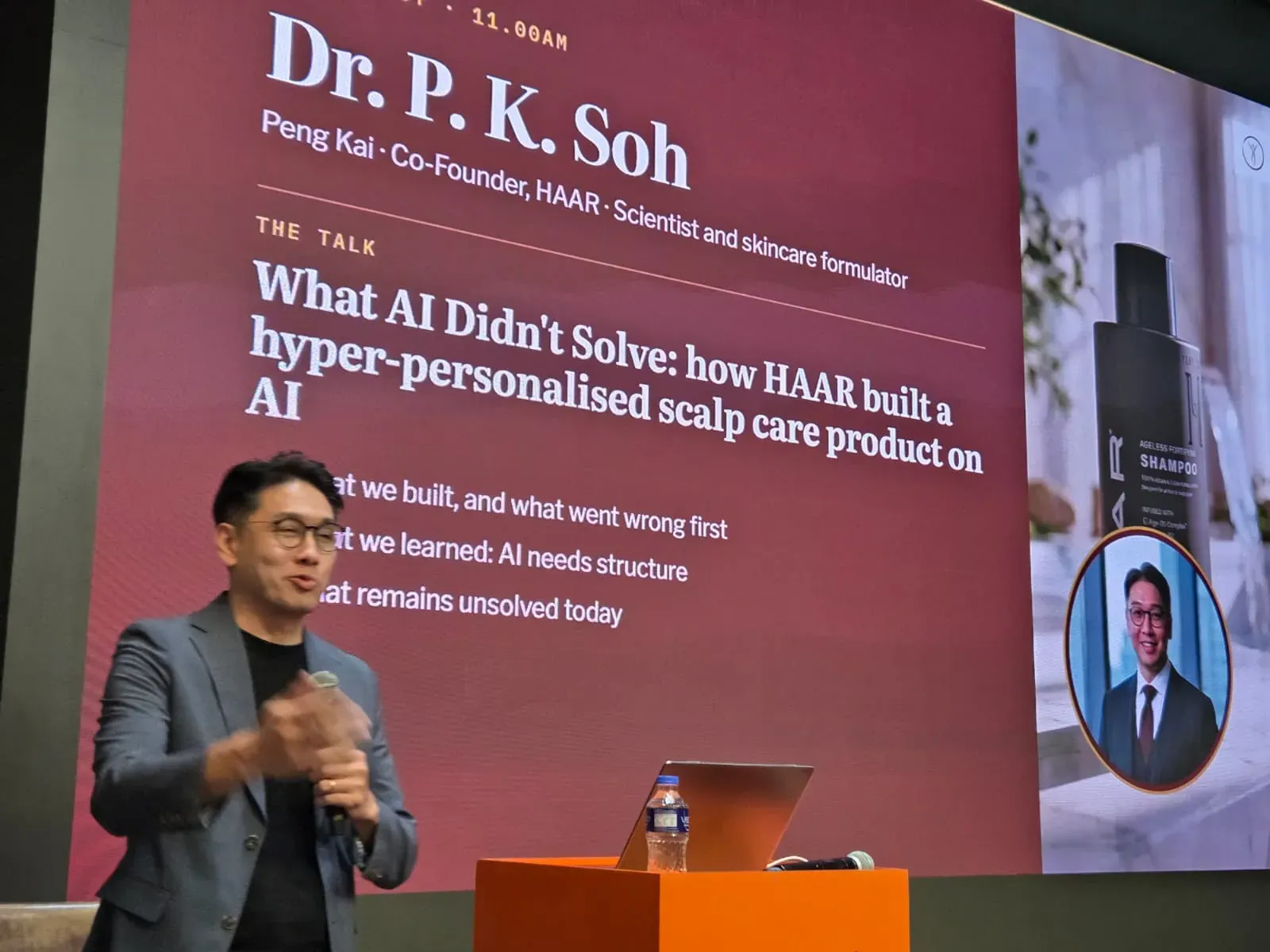
Dr. P. K. Soh on what AI didn't solve for HAAR.
About this morning
A strategy the training was supposed to serve
Most organisations that say they have an AI strategy have an AI training budget. Staff attend a course, a few tools get licensed, and a year later nothing in how the business makes decisions has changed. What is missing is the strategy the training was supposed to serve.
Four practitioners who advise boards, ministries and business owners each take one piece of that gap: why training on its own does not add up to a strategy, how to get from scattered pilots to an operating model your team can run, why a language model asked to judge a business plan will usually approve it unless it is held to strict constraints, and what a governance framework looks like when it is built for Singapore's regulators rather than imported (demonstrated live on a working agentic AI system).
It closes with Dr. P. K. Soh on how HAAR used AI to deliver a hyper-personalised product for the scalp care market, including the strategy decisions made before anything was built.
Four talks
What each speaker left the room with
Drawn from the speakers' own slides. Every speaker has a public profile on this site; click through for their full record.
-
Talk 01
AI Training Isn't the Same as an AI Strategy
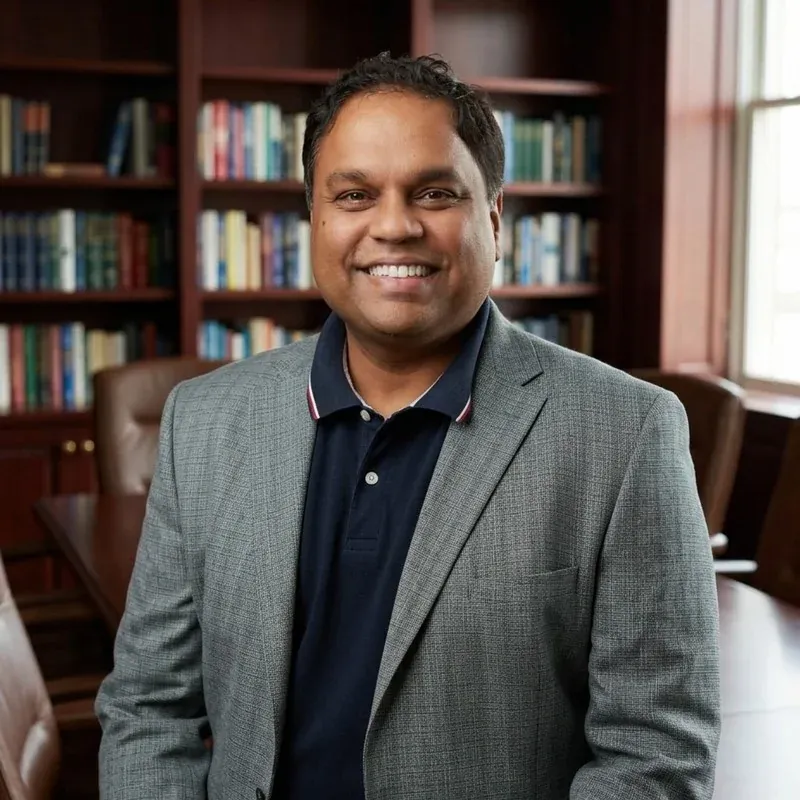
Dr. Jayarethanam Pillai AI Economist & Founder
Training changes what individuals know, while the KPIs, risk thresholds and compensation that drive decisions stay exactly as they were. A strategy is subtractive: it reallocates capital, accepts losses in chosen areas and stops work that does not fit. Before funding any course, Dr. Pillai asked leaders to test it on three points: have decision rights and KPIs changed alongside it, does the organisation know which activities to stop, and does the training follow from a specific strategic trade-off or from a generic upskilling goal?
“Training opens options. Strategy closes doors.”
-
Talk 02
From Pilots to an Operating Model: An AI Strategy Your Team Can Run
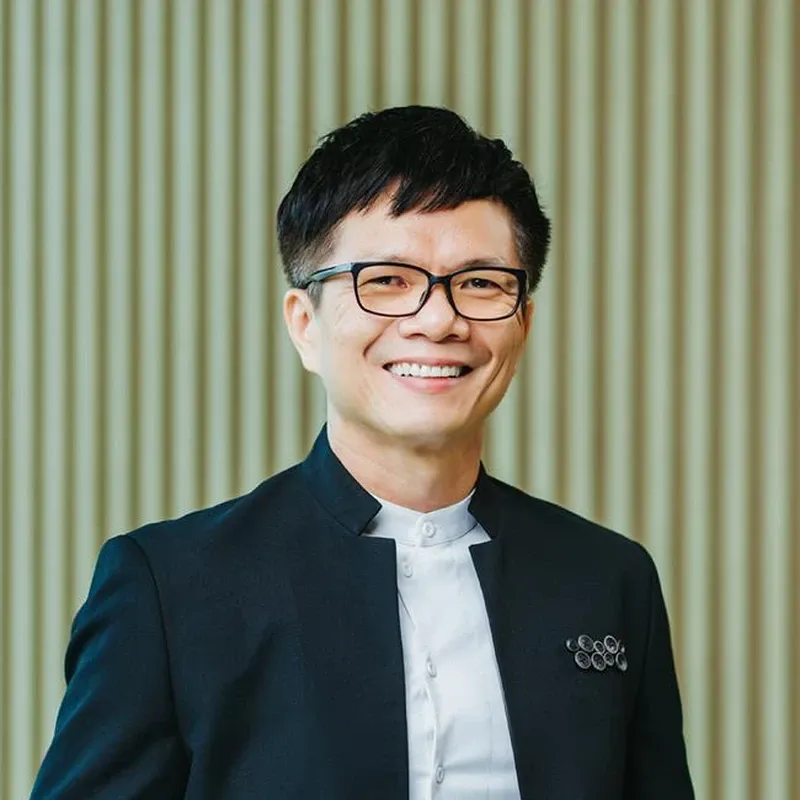
Michael Low AI Transformation Strategist & Human Capability Architect
Michael opened with two show-of-hands questions: how many AI pilots is your organisation running, and how many now run as business as usual? The gap between those hands was the talk. He set out three shifts that turn AI activity into an operating model (from AI to work, from task to organisation, from pilot to transformation) and the S.E.N.S.E. framework of Spot, Empathise, Narrow, Solution and Evaluate as five questions to ask at every decision. Usage shows that AI was adopted; it does not show that the work, the risk or the people got better. His Monday-morning advice: pick one real workflow and answer five questions for it before you buy, build or train anything.
“Don't just build more capable systems. Build a more capable organisation around them.”
-
Talk 03
GenAI Is Not an Oracle: How Founders Stop It Flattering a Flawed Plan
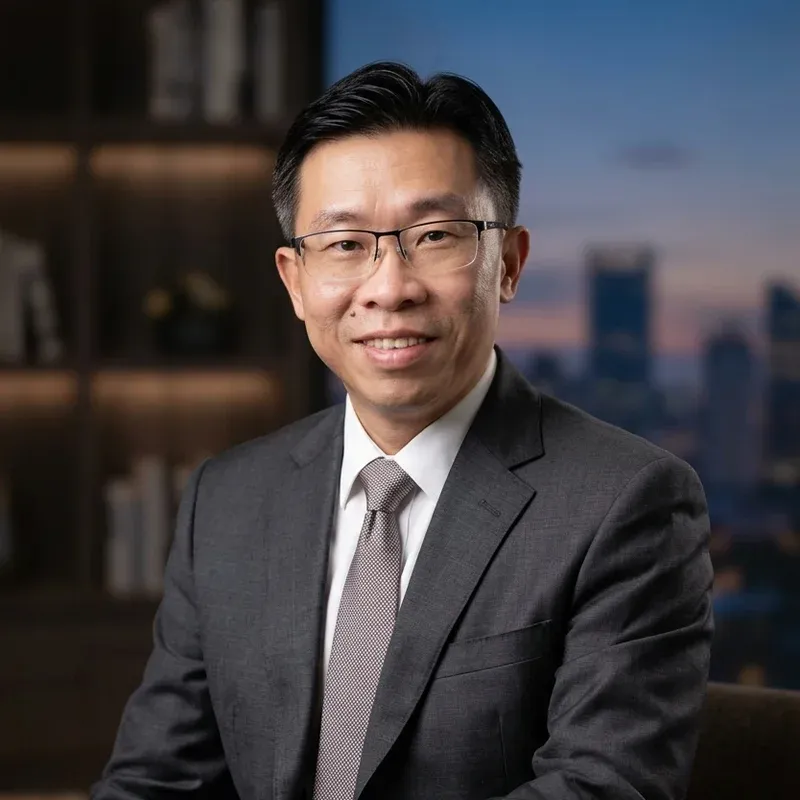
Patrick Ng Venture Creation Instructor & Deep-Tech Mentor
A language model predicts what comes next from what has already been written, so it cannot see a market that does not exist yet. Patrick named four pitfalls (algorithmic flattery, red-ocean ideas, hallucination, and a jagged frontier that cannot read a polite white lie) and a countermeasure for each, from a deliberately cynical venture-capitalist persona to interviews in place of surveys. At his 2026 bootcamp in Shenzhen, 40 founders in 7 teams worked with that persona: 78% found it helpful, confidence in customer discovery rose from 2.7 to 3.8 out of 5, and problem clarity from 2.5 to 3.6. After real market validation, most teams said the agent still needed domain-specific tuning.
“The ground truth lives in the street.”
-
Talk 04 Live demo
An AI Governance Framework Built for Singapore
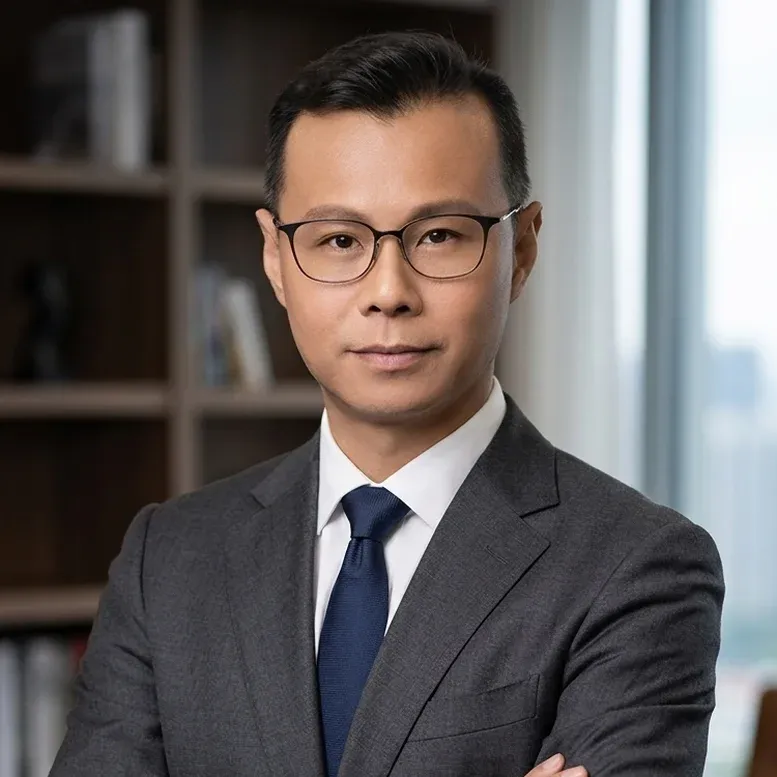
Terence Kok AI Governance & Assurance Practice. Enterprise AI Strategist and Keynote Speaker
Terence opened with eight public incidents from the last fifteen months in which AI agents deleted data, escaped a sandbox or reached files they should not have, and traced each one to a missing control. He then mapped Singapore's expectations, set across eight documents from MAS FEAT in 2018 to the SAFR safeguards in July 2026, to seven layers of control and the ISO/IEC 42001 evidence an auditor samples. In the live demonstration on synthetic data, Bank of the Future executed only the exact payment the customer approved, held a suspected scam payment even after a valid passkey approval, and failed verification of its audit log the moment one record was edited. He left the room with five decisions for this quarter: a named owner for every agent, a written risk appetite, governance inside the AI strategy, rules that move money or data kept in code, and an ISO/IEC 42001 scope starting with the highest-risk agent.
“The AI proposes. The rules you can show a regulator decide.”
Left without strict constraints, large language models default to algorithmic flattery. They will happily validate a deeply flawed business plan.

Dr. P. K. Soh HAAR
Live case study
How HAAR built a hyper-personalised scalp care product on AI
"I'm not an AI expert. I'm a scientist," Dr. Soh began. HAAR's range of fifteen products allows 432 possible routines, and when friends and family tried the prototypes, they were lost. People did not need more choice. They needed guidance, so HAAR turned to AI for a real scalp assessment rather than another product quiz.
The first attempt, teaching the AI everything about the products and letting it run, failed: two people with similar concerns got completely different results. What worked was structure. Every scalp concern was grouped into the Seven Pillars of Scalp Longevity, the questions were built around them, and the answers produce a score on each pillar that leads to the routine, adjusted so the index does not penalise natural ageing. It took weeks rather than the months a team with a biostatistician would have needed.
Then the honest answer. The product works, and the biggest challenge today is getting people to find it and try it. If he did it again, Dr. Soh said, he would put more time into marketing and distribution before building something this advanced.
“We solved the right problem. In the wrong order.”
Agenda
Breakfast at 8.15, first talk at 9.00, done by noon
The programme as published for the morning.
-
8.15am
Registration and breakfast
-
9.00am
AI Training Isn't the Same as an AI Strategy
Opening address. Why a training budget is not a strategy, and what to decide first.
-
9.30am
From Pilots to an Operating Model: An AI Strategy Your Team Can Run
From experimentation to an operating model, using the S.E.N.S.E. framework.
-
9.55am
GenAI Is Not an Oracle: How Founders Stop It Flattering a Flawed Plan
Why an unconstrained language model will validate a flawed business plan, and the constraints that stop it.
-
10.20am
An AI Governance Framework Built for Singapore
A framework mapped to Singapore's regulatory expectations and ISO/IEC 42001, built for a board to sign, with a live demonstration of governed agentic AI in voice banking.
-
10.45am
Break
-
11.00am
Case study: how HAAR built a hyper-personalised scalp care product on AI
Dr. P. K. Soh, HAAR
How HAAR got from a strategy decision to a live personalised product, told by the person who led it.
-
11.30am
Panel discussion and questions
All speakers and Dr. Soh take questions from the room. Close at 12.00pm.
Venue
SGInnovate, Level 1
32 Carpenter Street, Singapore 059911
- By MRT
- Clarke Quay (North East Line) is a two-minute walk: the station sits at the Eu Tong Sen Street end of Hongkong Street, one block west of the venue. Raffles Place (East West and North South Lines) is about ten minutes on foot.
- By car
- Carpenter Street is one-way. The nearest public car parks are along Hongkong Street and at Clarke Quay Central; street parking on Carpenter Street is limited.
- On arrival
- Enter at street level and ask for the Praxora Lab breakfast briefing on Level 1. Registration opens at 8.15am.